%20(3).png)
American Oak and European Oak: What’s the difference and does it matter?


I have to preface this post with a simple, undeniable truth: I despise Port Pipes.
Despite their large, imposing size, I find them the most conniving of all the cask types and varieties. I often make the joke on my Founder’s Tour that if you walk past a Port Pipe and sneeze, it will inevitably spring a leak.
Now that I have gotten this off my chest, I can safely say that casks are one of the most important facets of a distillery. Yes, it’s a maturation vessel, but due to its influence on flavour of the liquid, it’s also an ingredient; furthermore, Scotch Whisky can only be matured in casks and barrels made from oak. Lucky for us, this isn’t as limiting as you might think.
While there are two main types of oak used to make barrels and casks: American White Oak (Quercus Alba) and European Oak (Quercus Robur), these come in a variety of sizes as well as purposes, offering flexibility and creativity in Scotch Whisky maturation.
For American White Oak, there are three main sizes of barrels: Quarter Cask (50 L), American Standard Barrel (200 L), and Hogshead (250 L). All of these are used initially in the Bourbon industry before being shipped around the world for re-use.
For European Oak, the variety opens up further with Wine Barrique (225 L), Cognac Barrique (300 L), Sherry Butts and Sherry Puncheon (500 L), and Port Pipe and Madeira Drum (650 L). This wide variety comes from mostly the wine industries of France, Spain, and Portugal.

What do each have to offer?
As American Oak typically holds Bourbon initially, the maturation of Scotch Whisky in these barrels provides a beautiful golden colour over time as well as those cereal and baked-goods notes from the previous liquid, but also notes of vanilla and caramel coming straight from the wood itself due to the high tannin content. Additionally, these casks are often charred creating a note of caramelization as well as offering an “internal filter” of sorts, removing impurities throughout maturation.
With European Oak being the maturation vessel for wines and sherries, colour is provided almost instantly to maturing Scotch Whisky, along with notes of dried fruit, spice, and an inherent nuttiness from the actual wood. Depending on the sherry or wine previously housed in the barrel, the flavour profiles vary, but the addition of fruity and sweet flavours can be expected. As these casks vary significantly in size, the maturation length and flavour profiles will also vary considerably due to surface area contact with the liquid as it ages: the bigger the cask, the slower the infusion of flavour.
In a somewhat confusing twist, there are a number of specific types of sherry that use American Oak barrels. A Hogshead cask is created from American Standard Barrels (ASBs), with the staves deconstructed in America and reconstructed in Europe into the larger Hogshead (it takes 5 American Standard Barrels to make 4 Hogsheads). Because of its larger size, it's the perfect vessel to house and mature sherry. Oloroso and Palo Cortado are two sherries that commonly use Hogsheads for maturation.
What casks do we use at North Point Distillery?
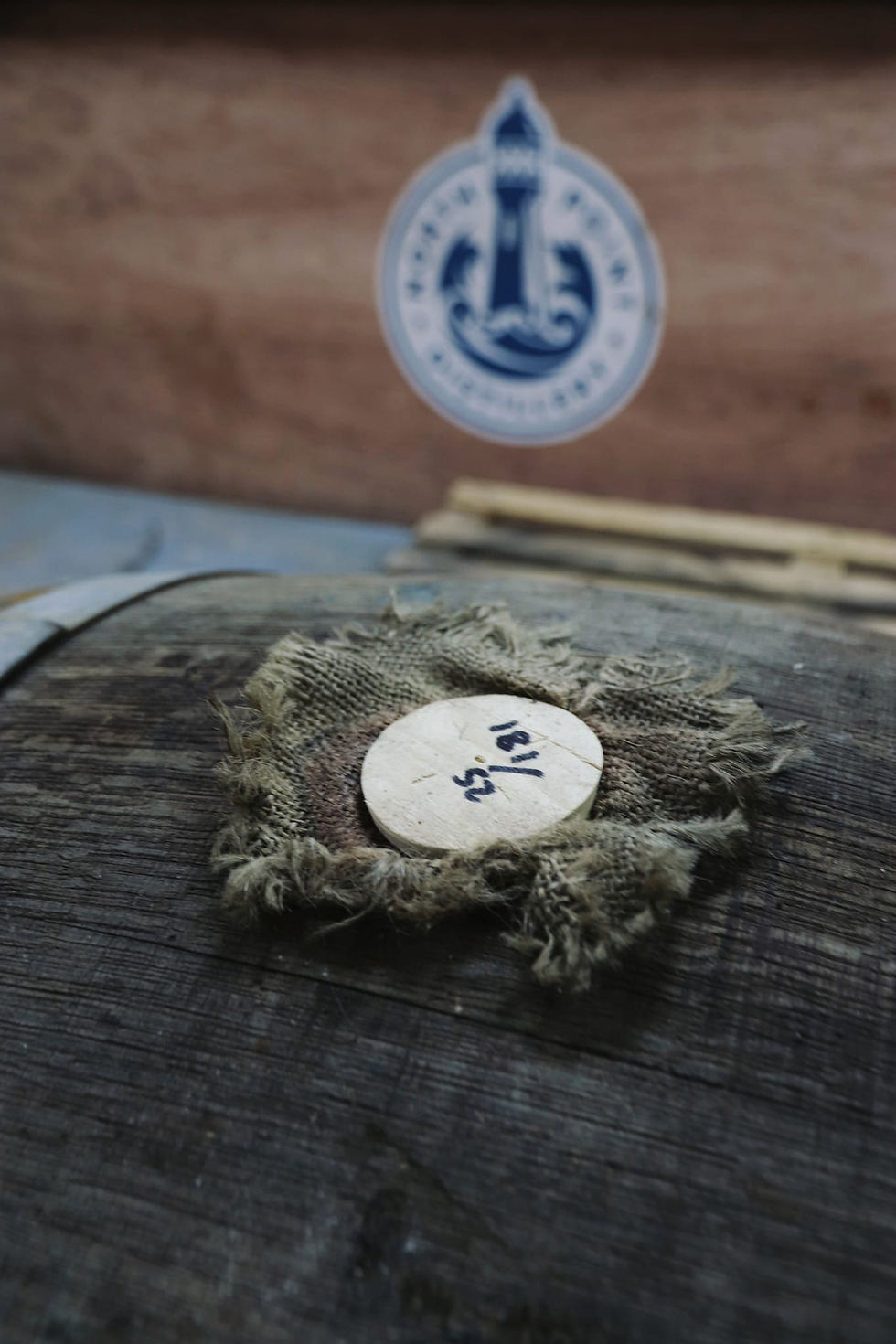
For our Dalclagie Scotch Whisky, we use mostly American Oak. For the full length of maturation, our Scotch Whisky is housed in American Oak, simultaneously in both sherry Hogsheads and Bourbon barrels: bourbon barrels to impart that beautiful bourbon influence as well as those delicious vanilla and caramel notes from the wood; and Palo Cortado and Oloroso casks which influence the liquid with notes of dried fruit, such as fig, as well as dark chocolate, toffee, toasted almond, and citrus. These two variations will then make up our final spirit offering.
While we do also have American Oak rum and European Oak sherry, wine, and rum casks maturing our Scotch Whisky, these are mostly part of our Cask Ownership Programme or for special releases in time.
For our North Point Rum, the casks we use are almost exclusively American Oak, with these having come from the bourbon industry. We use a mix of bourbon and ex-Highland Whisky casks (which are in themselves ex-bourbon) to mature our rum, while offering both American and European oak sherry and red wine cask options within our Cask Ownership Programme – and as of 2026, we also have American Oak maple syrup casks available exclusively for our Rum Programme (unfortunately, these are not permitted for Scotch Whisky maturation, which, as a Canadian, I am quite upset about).
Another 2026 first: we have added cask-aged Gin to our Cask Ownership Programme. The casks we are suggesting to our gin-loving customers are sherry and wine, with our team guiding cask buyers to their perfect cask choice based on their tastes and preferences.
Ultimately, one is not better than the other; it’s kind of apples and pears – and apple-pear hybrids... Whether sherry casks, quarter casks, ASBs, or Hoggies: all of these are great casks and have much to offer by way of flavour and structural integrity for long maturation and I’d be more than happy to walk you through your options if you decide to join our Cask Ownership Programme… but I will just never work with a Port Pipe ever again (I will save this topic for another blog, as it is a great tale of woe and epic struggle. Think: The Odyssey, but with a great beast of a barrel).
Click the link to purchase a cask or express your interest! Or send me an email at alex@northpointdistillery.com for more information about our Cask Programmes – and keep your eyes peeled for the elusive Port Pipe story, coming soon.
Alex
CoFounder of North Point Distillery


Comments